
A rescued Lab excels as a seizure alert dog for an adventurous woman.
by Jen Reeder
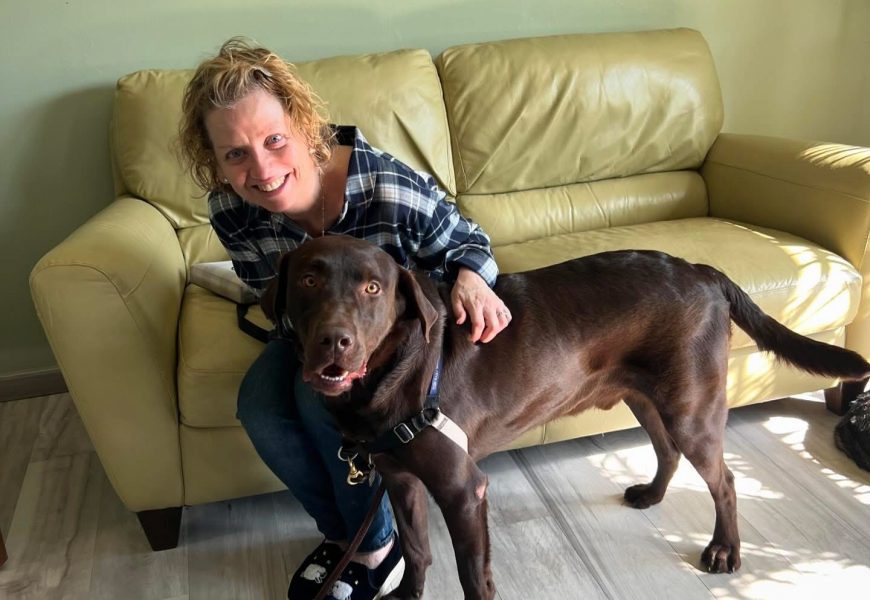
Opening photo: Paula Peterson meeting Wrangler for the first time. (Photo courtesy of Medical Mutts)
Paula Peterson was sipping a cup of coffee, waiting for her husband to meet her, when a man and his service dog walked into the coffee shop. For some reason, the dog kept pulling his way over to Peterson, which embarrassed the handler, who repeatedly apologized.
But the dog kept trying to get to Peterson, and eventually his handler ventured, “I don’t want to be a jerk, but do you in any way have a seizure disorder?”
To which Peterson replied, “Actually, I do.”
In 2020, Peterson was diagnosed with occipital epilepsy, which creates balance issues, brain fog, and hallucinatory seizures – she’ll see things that aren’t there. She had to stop working as a scrub nurse and could no longer drive. She struggled with the loss of independence.
She was on a rare outing at the coffee shop to try to curb the depression that followed her diagnosis. In fact, she was having hallucinatory seizures as the dog kept coming over, which she told the dog’s handler.
“He said, ‘Is there anyone I can call? Do you need anything? Because my dog is a seizure alert dog,’” she recalled. “I was just fascinated. I didn’t know seizure alert dogs could pick up on other people.”
The chance encounter proved pivotal for Peterson. She felt isolated because loud noises and flashing lights trigger the seizures, so she seldom left home alone.
“The only way to solve that problem was the dog,” she said. “So I did my research and found Medical Mutts.”
Medical Mutts Service Dogs is a nonprofit based in Indianapolis, Indiana, that rescues dogs from animal shelters and trains them for a variety of medical alert jobs, including seizure alert. Peterson had fostered dogs for over a decade and liked the idea of giving a shelter dog a second chance as her service dog.
So in November of 2024, she flew from Boston to Indianapolis to partner with a chocolate Lab named Wrangler. Just minutes after arriving at Medical Mutts, she was standing and talking to a trainer – trying to overcome a hallucinatory seizure – when Wrangler started nudging her thigh with his nose.
He was alerting to her seizure. She needed to sit down.
Everyone was amazed. Service dogs don’t usually alert on their first day – let alone first minutes – of meeting their new partner.
“We’ve had a very good bond from day one,” Peterson said. “He understands me on a molecular level, and that’s deeply personal.”
When Wrangler alerts Peterson to an oncoming seizure, she can sit down to avoid losing her balance. He fits in well with the family, which includes Peterson’s husband, Doug; their sons Bradley, a college student, and Ryan, a recent graduate; and pet dogs Yoda and Daisy. She feels Wrangler is an “old soul” with a playful side.
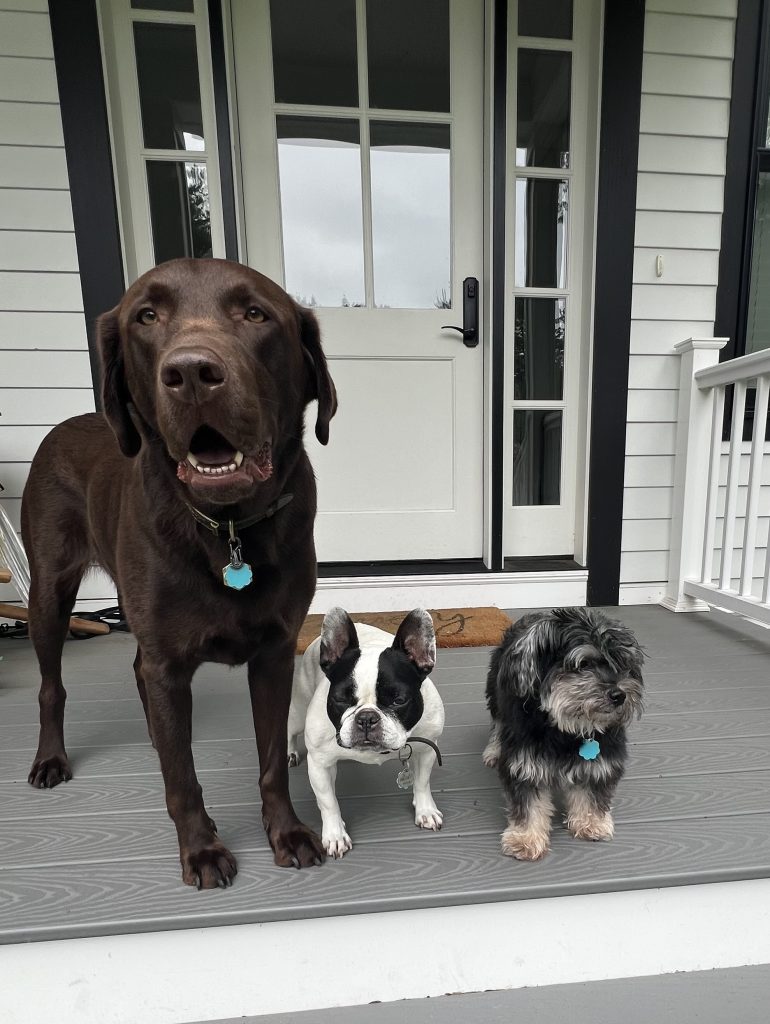
“He can be a big goofball when he wants to be, but he does like his downtime,” she said. “He’ll put himself to bed. It’s really funny.”
Peterson and Wrangler take the train to Boston at least once a week from their home in Natick, Massachusetts. Wrangler goes with her to the gym, and travels to visit the couple’s sons, even to loud college lacrosse games to watch Bradley compete. This summer, the Lab took his first boat ride and after initial hesitation, embraced it because of the trust he shares with Peterson.
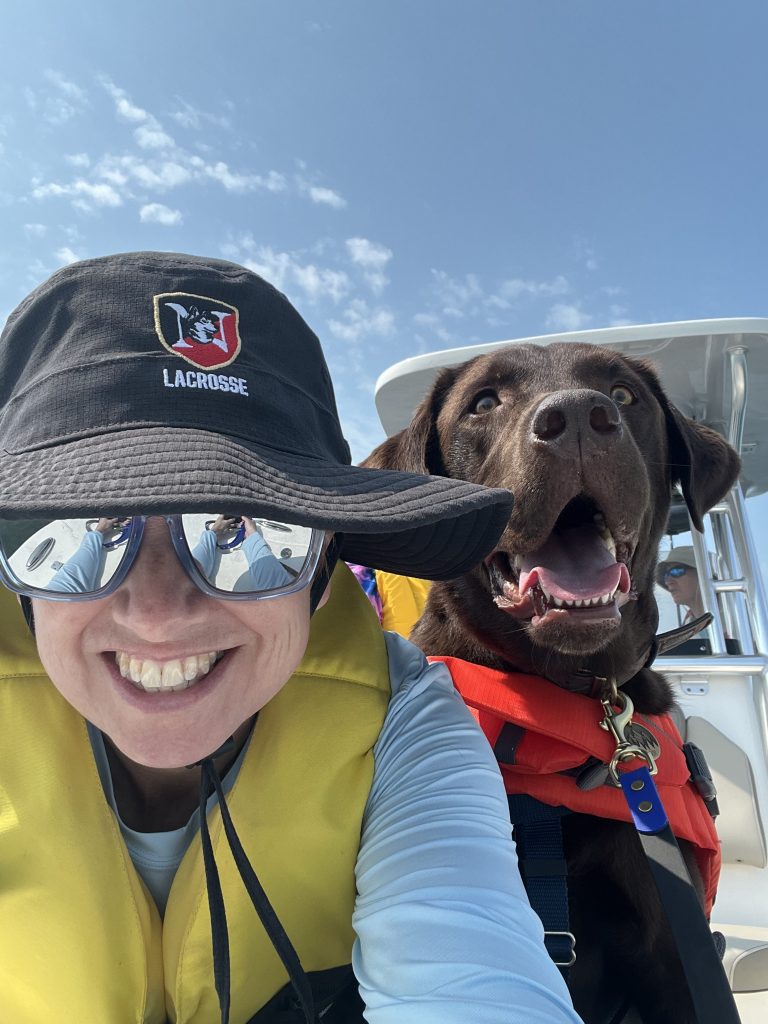
She feels “blessed” to have partnered with Wrangler, and that she’s done more in 10 months since partnering with him than she did in the years following her diagnosis.
“Epilepsy steals a lot of your freedoms, especially this type of diagnosis,” she said. “The other part of my diagnosis is I don’t know if I’m going to have a brain bleed. It comes out of nowhere. It’s a ticking bomb, essentially, but I can’t worry about it and be constantly consumed with it. So Wrangler is my lifeline. He has not just been about gaining my independence back but also about getting back to who I was before my diagnosis.”
Jennifer Cattet, Ph.D., founder and executive director of Medical Mutts Service Dogs, loved watching Wrangler and Peterson connect so profoundly on their first day of training. She considers them a “great match” because of Peterson’s willingness to learn how to work with a service dog and soldier on through any challenges, and Wrangler’s innate talents.
“Wrangler is one of those dogs that completely fits the bill of the type of dog we’re looking for: very social, very food motivated, and he just has this really sweet, caring personality that Labs often have that we love about them,” she said.
The fact that Labs typically have insatiable appetites helps them excel at medical detection work, she noted. Medical Mutts uses positive reinforcement training not only because it’s ethical, but because of its efficiency.
Highly skilled medical alert dogs, such as seizure alert dogs, need to be capable of taking initiative and making decisions on their own – even when that means disobeying an order. If a dog fears punishment, he might hesitate to disobey.
“Let’s say you’re at a restaurant and you cue your dog into laying under the table and staying there. Well, if you have an episode, your dog has to get out of position and start poking you,” she said. “If they’re concerned that you’re going to be yanking on them or shove them back into position, or punish them in some way for breaking the stay, then they have to make a decision between their own comfort or reacting to the scent they’re smelling.”
Ultimately, Dr. Cattet and her team want their canine graduates to enjoy their jobs.
“We truly believe that being a service dog is one of the best lives in the world that a dog can have because they get to go everywhere with their person, and they get matched with a person who’s going to develop a deep bond with them,” she said. “It’s a two-way partnership where they basically take care of each other.”
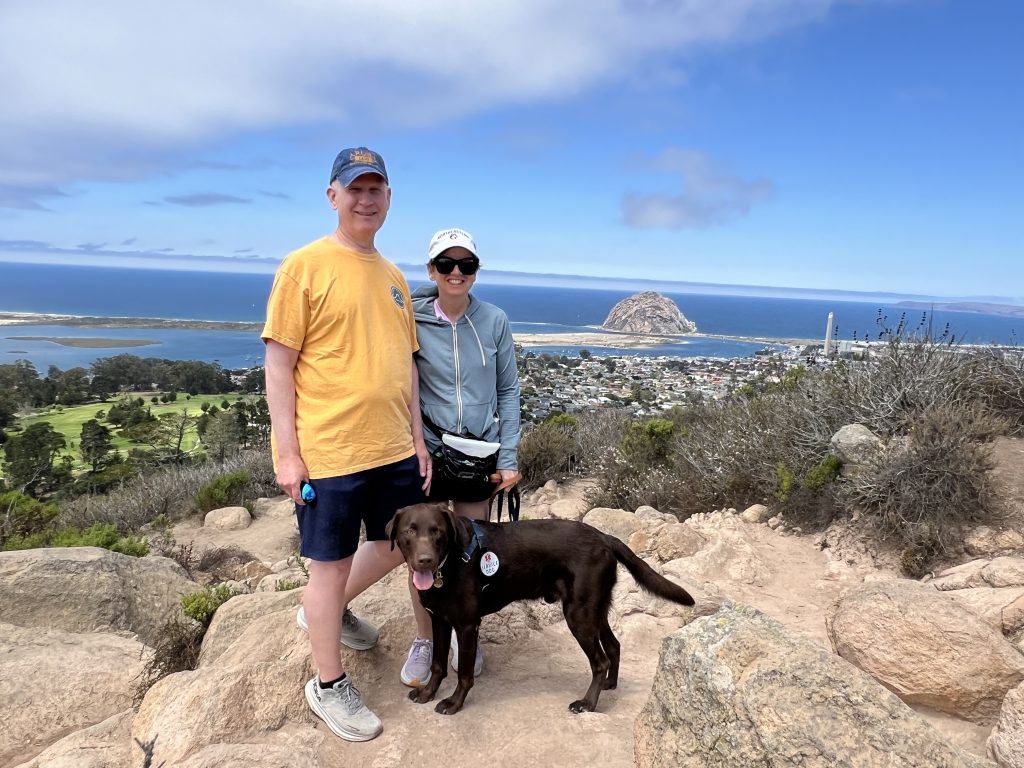
Meanwhile, Wrangler continues to live his best life with Peterson, who recently took him on vacation to California. He also enjoys visiting in-laws on Cape Cod, where he sits on the beach and watches birds dive into the water alongside his best friend.
Peterson is grateful that Wrangler is beside her every step of the way.
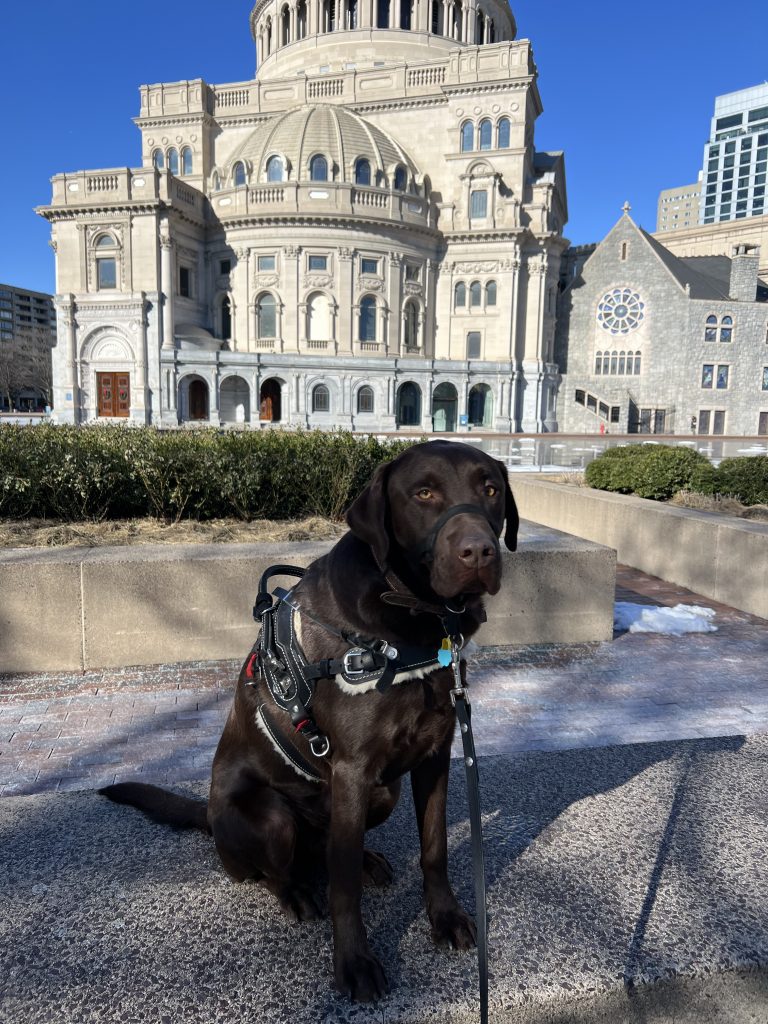
“I have Wrangler and a great family,” she said. “I’m not sure what my future holds, but as long as I have Wrangler, I am confident and ready to face it.”
For more information about Medical Mutts Service Dogs, visit: MedicalMutts.org.
SIDEBAR: The Science Behind Seizure Alert Dogs
Touchingly, humans discovered dogs can detect the onset of seizures because dogs showed they could – by getting worried about their people. Dr. Jennifer Cattet was co-author of a study that found that dogs can detect a specific scent emitted during and before a seizure.
“There doesn’t seem to be a difference in scent based on the type of seizure,” she said. “We also know that the scent signature that is related to a seizure is the same regardless of the person. So we can train a dog to alert with samples from previous clients and place that dog with a new client.”
For more information, visit: https://pubmed.ncbi.nlm.nih.gov/30923326.